AK Logistics — From Our Hands to Yours, With Care
Designing a modern logistics experience through UI/UX and AI-assisted development.
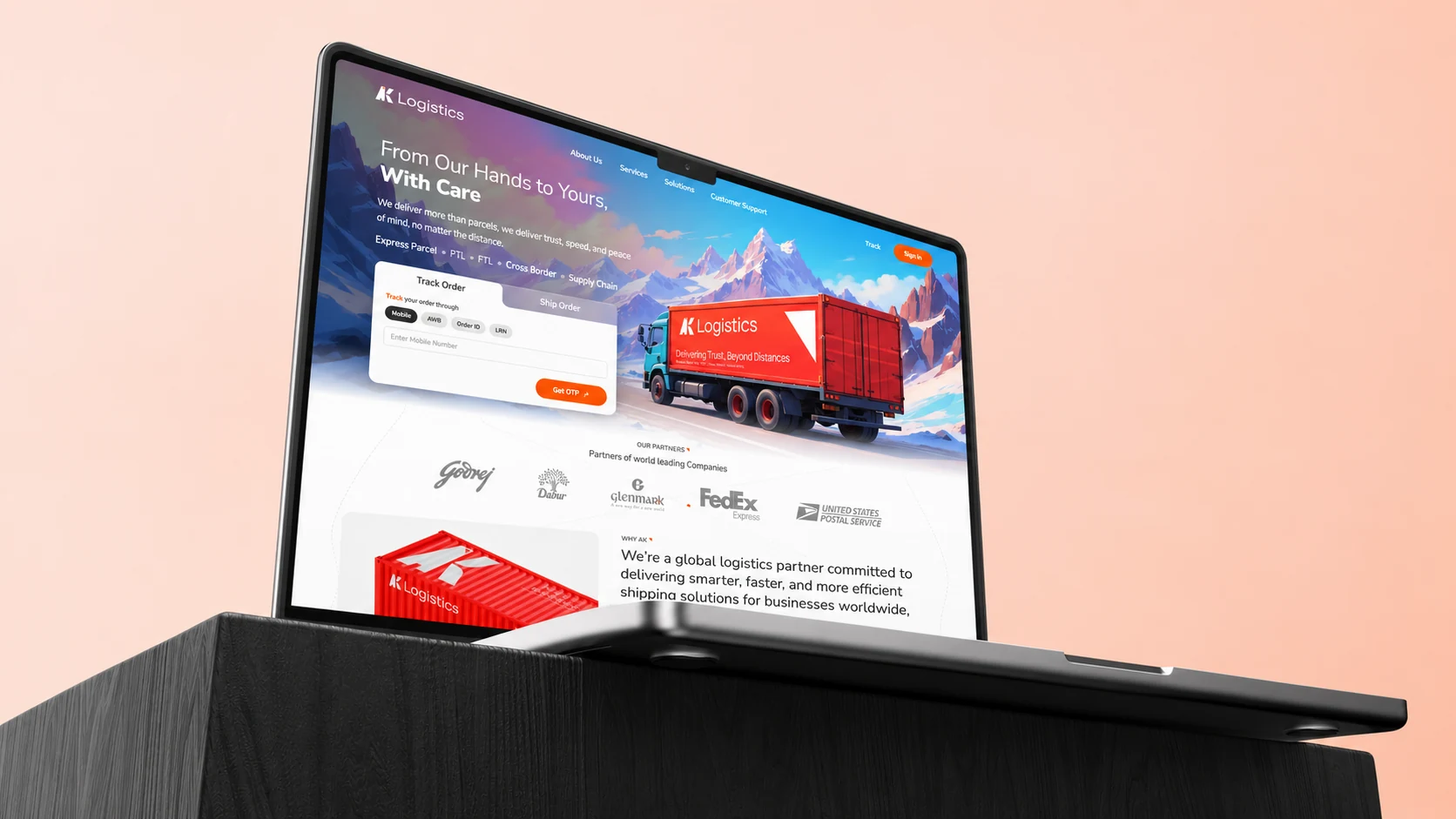
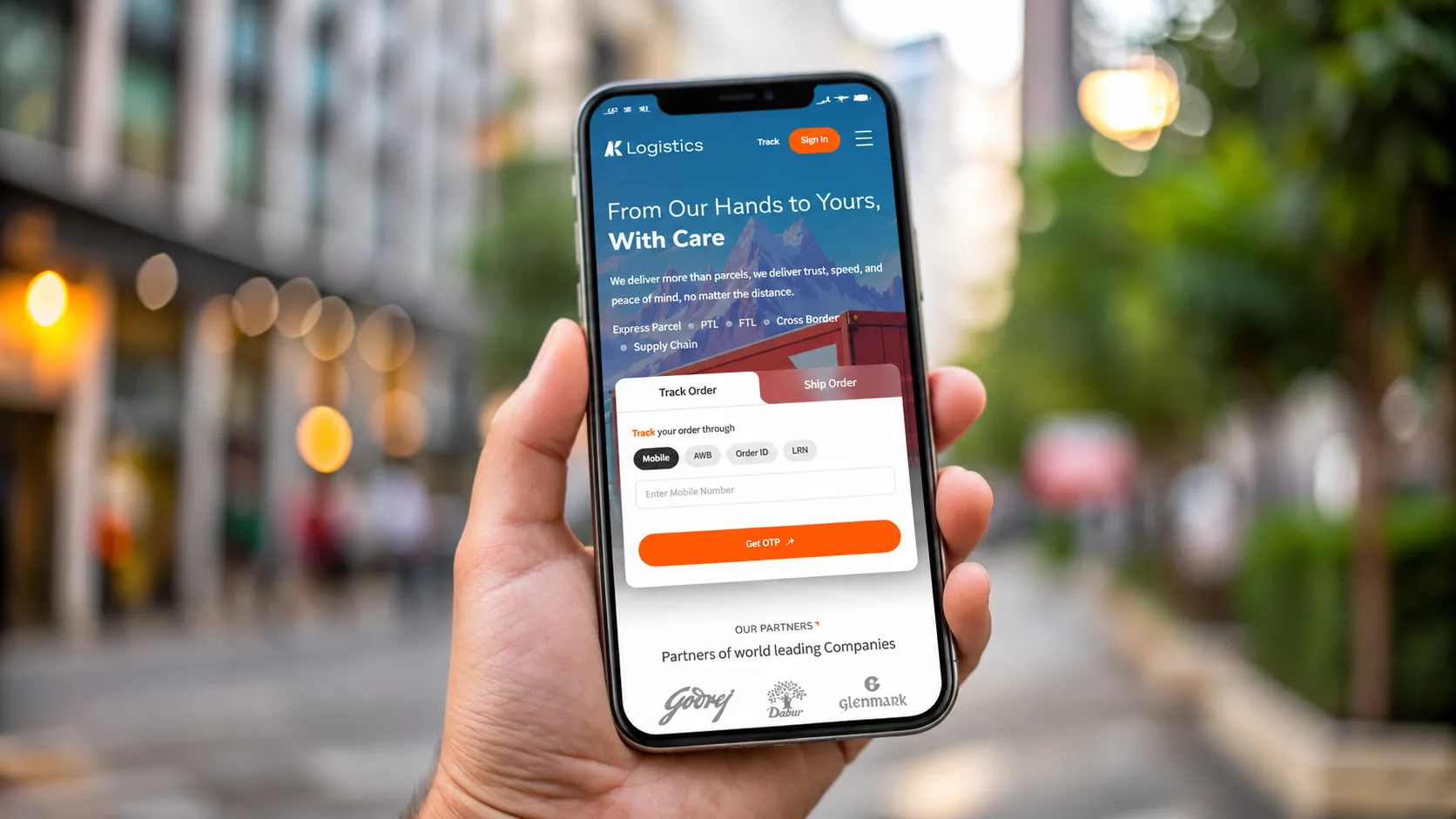
A self-initiated project exploring how thoughtful design and AI-assisted workflows can come together to create a complete digital experience for a logistics business. From brand identity and user experience to a functional, responsive website, the goal was to bring complex logistics services into one clear and accessible platform.
Project Overview
AK Logistics is a concept-driven logistics website designed to bring transportation, freight, warehousing, and international shipping services together under one digital experience.
I started with an existing visual direction in Figma and gradually developed it into a functional website. Along the way, I worked across brand identity, UX strategy, interface design, content structure, and AI-assisted development to turn the initial concept into a working digital experience.
The project also gave me an opportunity to explore how AI can support the design-to-development process, helping me move from visual concepts to functional interfaces while maintaining control over the overall experience.
Disciplines: Product Design · UX Strategy · UI Design · Brand Identity · AI-assisted Development · Responsive Web Design
Why This Project Started
The idea behind AK Logistics was to explore how a traditional logistics business could present its services through a more modern and engaging digital experience.
Logistics involves multiple services, from express parcel delivery and warehousing to freight transportation and cross-border shipping. For someone visiting a logistics website, understanding these services, identifying the right solution, and knowing how to get started should feel straightforward.
I wanted to create a platform that could bring these different offerings together without overwhelming visitors with information.
The project also started as an opportunity to revisit an earlier Figma concept that I had designed but never developed into a complete website. Rather than leaving it as a static design, I decided to take it further and explore how AI-assisted development could help bring the concept to life.
Research and Discovery
Understanding the logistics experience
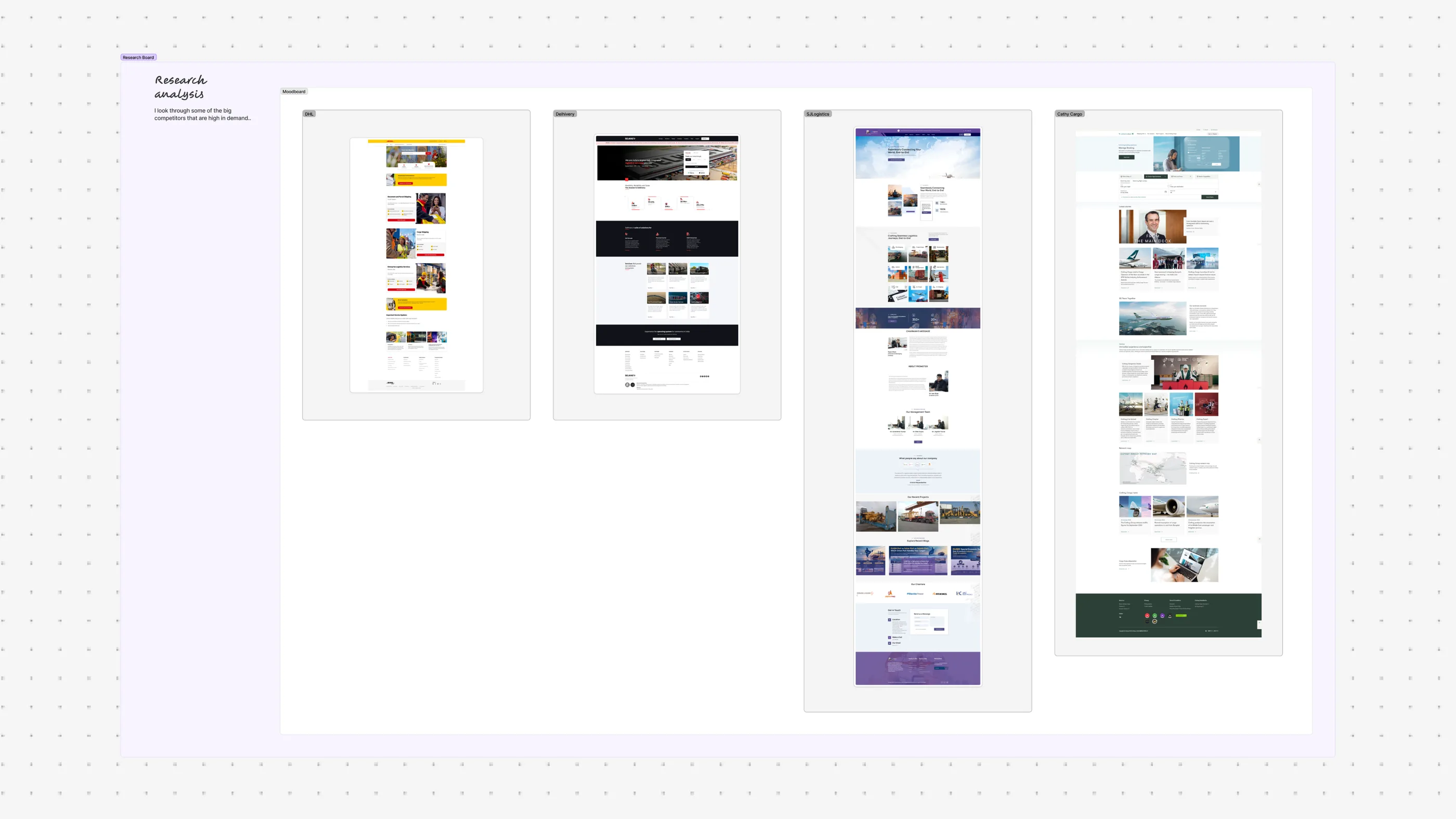
Before moving into development, I focused on understanding the different types of services a logistics business needs to communicate and the information visitors would expect to find.
The exploration centered around three important areas:
- Service Clarity: How can different logistics offerings be presented without making the experience confusing?
- Business Needs: How can the platform communicate solutions for individuals, growing businesses, and larger enterprises?
- Customer Confidence: What information would help visitors understand the process and feel comfortable getting in touch?
This helped establish the foundation for the website’s content structure, navigation, and overall experience.
Deliverables: Project direction, content hierarchy, service categorization, and initial UX considerations.
Persona Development
Designing for different logistics needs
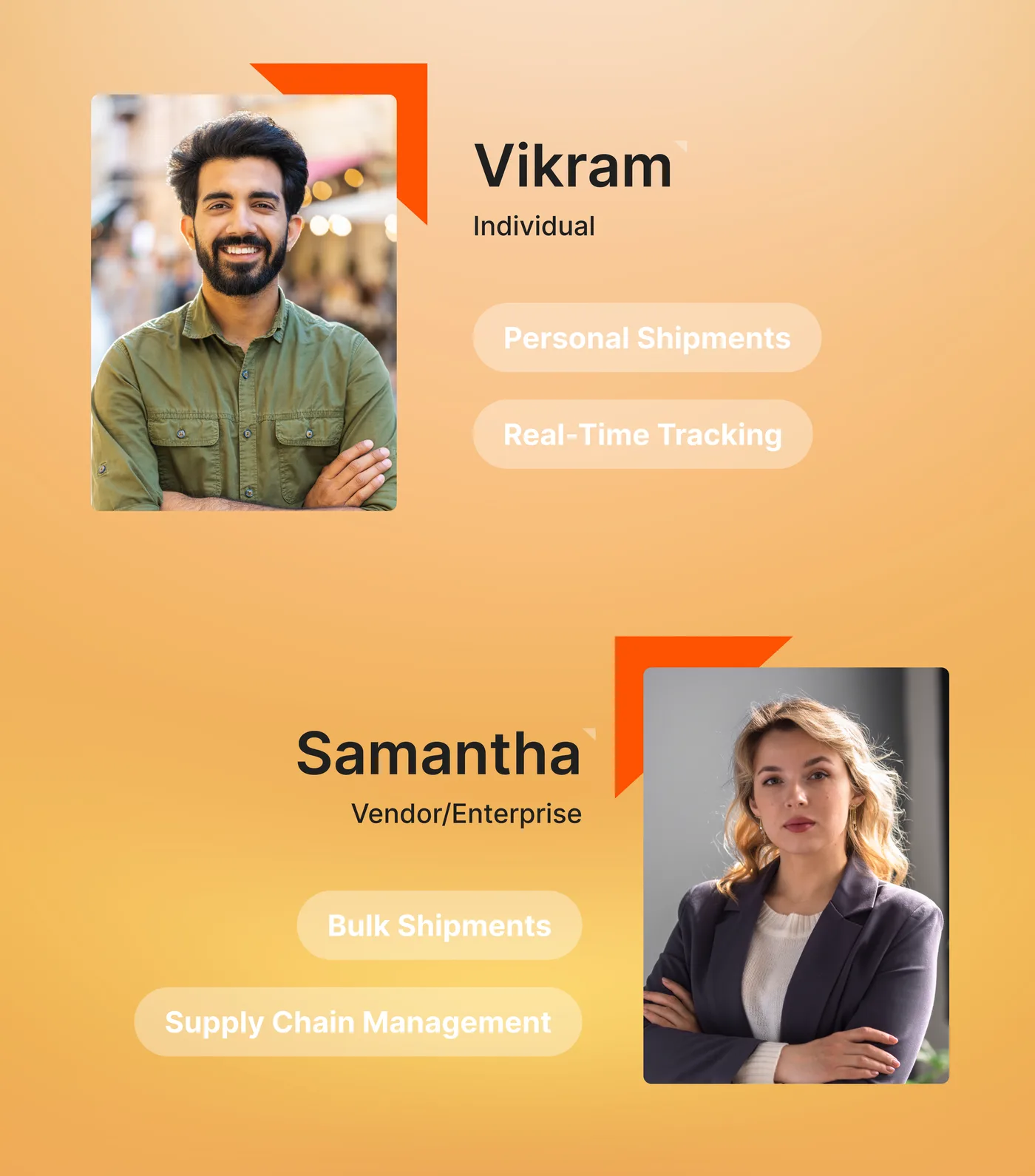
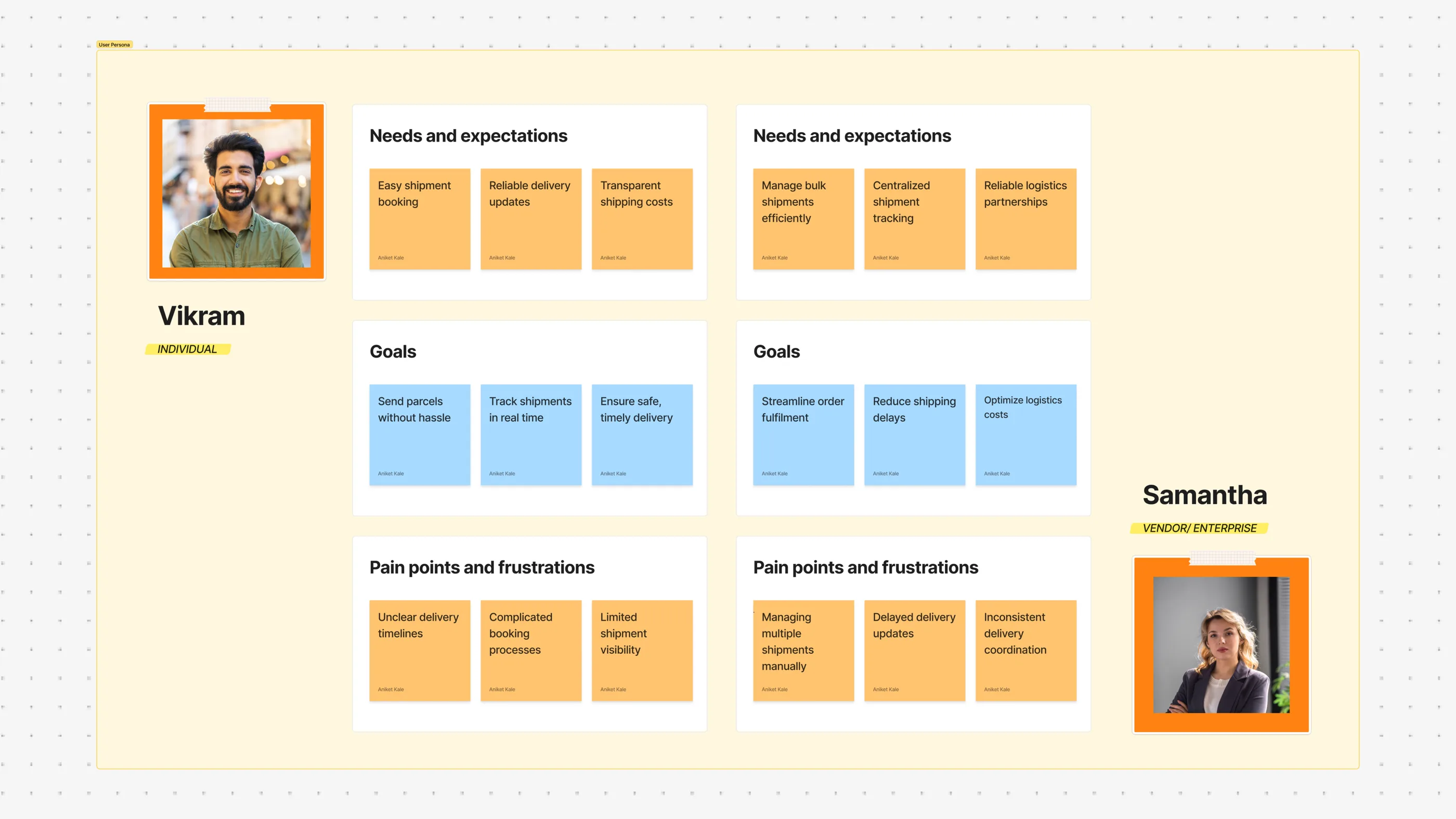
AK Logistics needed to communicate with more than one type of customer. A business shipping products regularly has different expectations from someone sending a personal parcel or an enterprise coordinating larger freight movements.
I considered three broad audience groups to guide the experience:
Individual Customers
People looking for convenient parcel delivery, document shipping, and reliable pickup options.
Growing Businesses
D2C brands and small-to-medium businesses that need dependable fulfilment, warehousing, and distribution.
Enterprise Customers
Larger organizations looking for freight transportation, supply chain coordination, import-export, and scalable logistics solutions.
These audience groups helped shape the way services were categorized and how information was presented throughout the website.
Deliverables: Audience profiles, customer needs, and experience considerations.
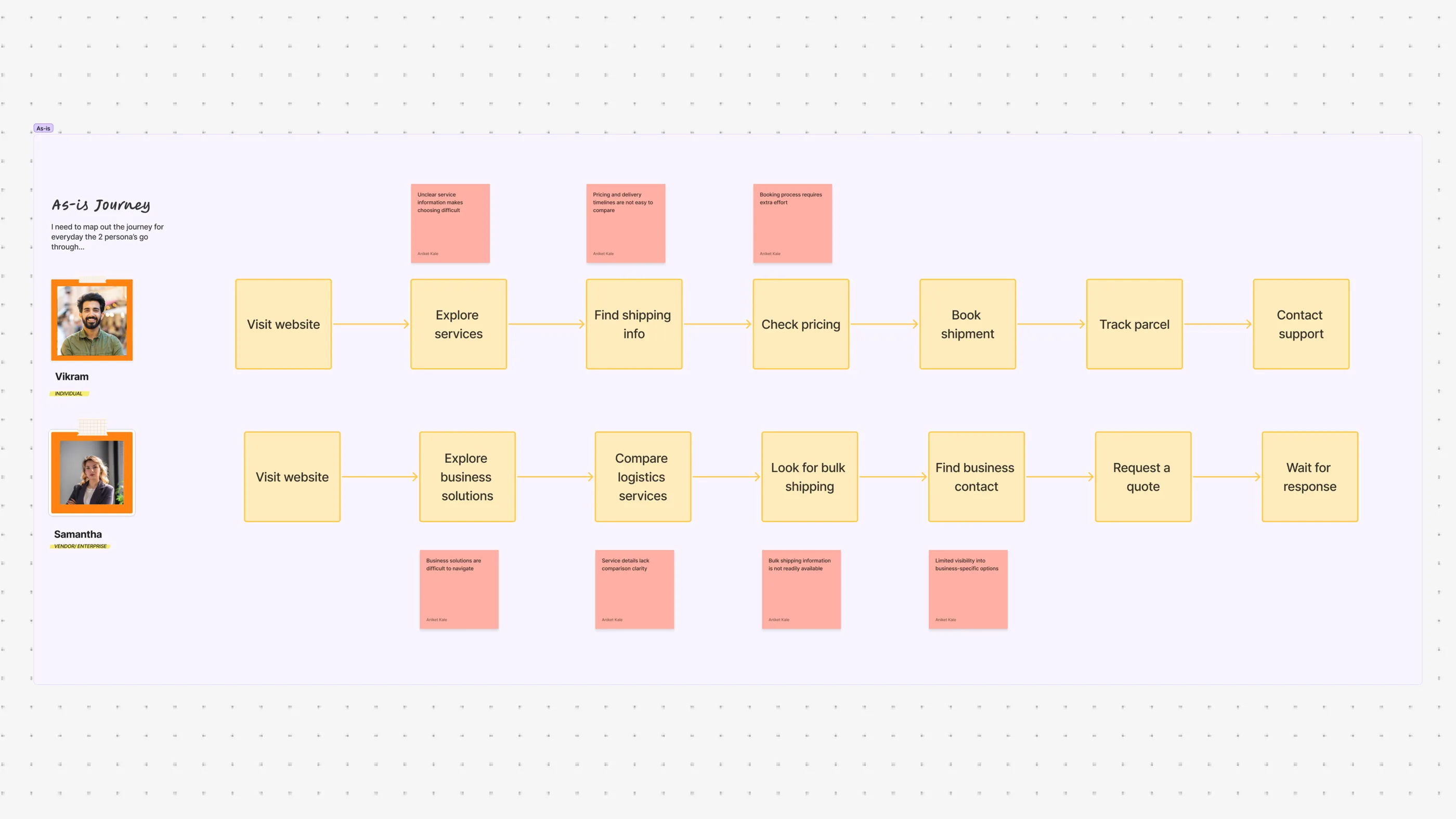
As-Is Journey Mapping
Understanding the information customers need
Before defining the website structure, I mapped out a simplified customer journey to understand the questions a visitor might have when exploring a logistics provider.
A visitor typically needs to understand what services are available, determine which option suits their requirements, learn how the process works, and find a way to get in touch.
I used this journey to identify the information needed at each stage and reduce unnecessary friction between discovering a service and taking action.
The key stages included:
- Discovering the logistics provider
- Exploring available services
- Identifying the right business solution
- Understanding the shipping process
- Requesting a quote or contacting support
Deliverables: Customer journey map and key information requirements.
Insights and Pain Points
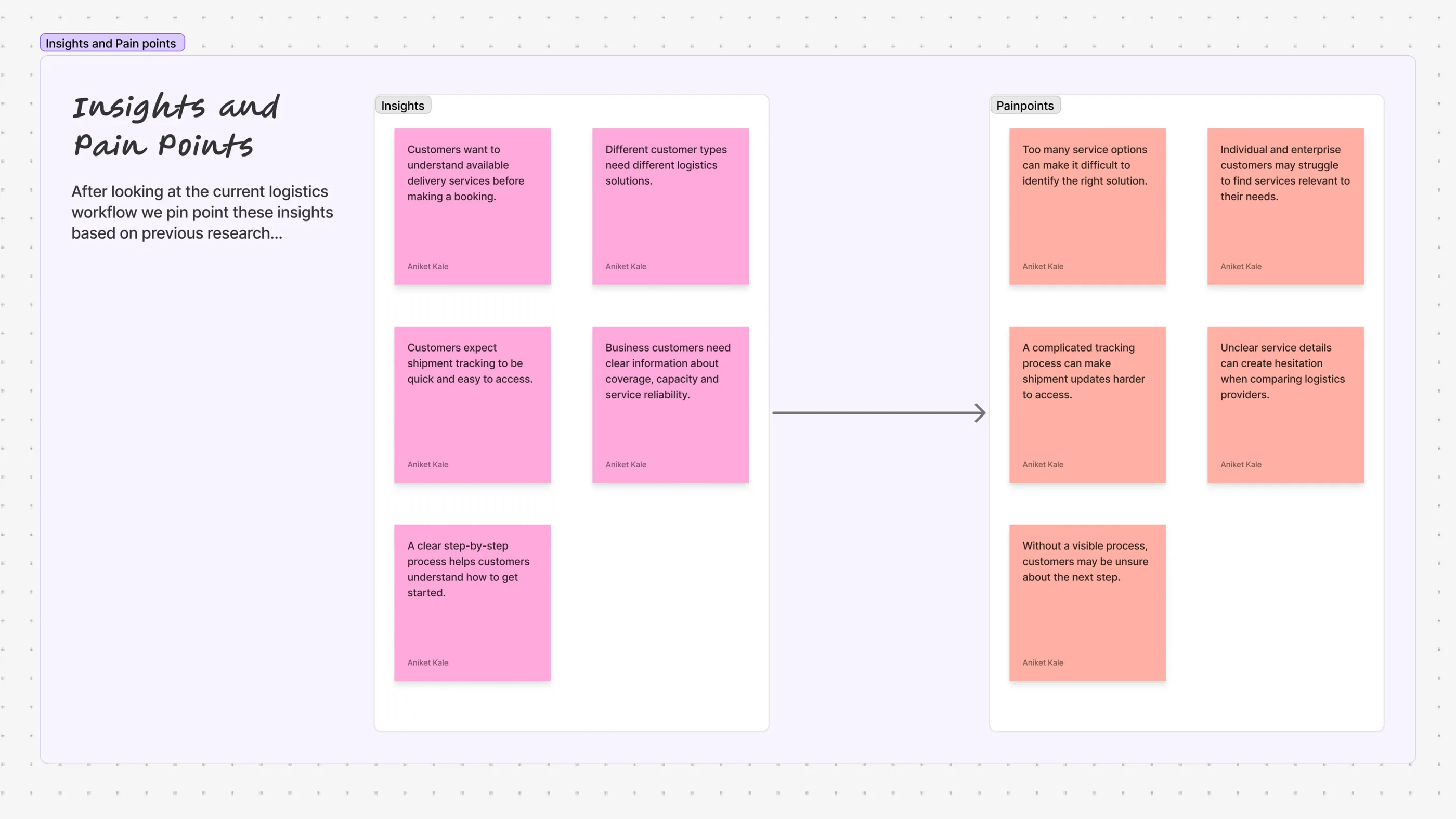
After exploring the project requirements and customer journey, I identified a few key experience challenges that the website needed to address:
Complex Service Categories
Logistics includes several overlapping services. Visitors need a clear way to understand the differences and find the right offering.
Information Overload
Presenting every service and business capability at once can make the website difficult to navigate. Information needed a more structured hierarchy.
Lack of Process Clarity
Customers should understand what happens after they submit their shipment requirements, from choosing a service to getting the shipment moving.
Trust and Credibility
Logistics involves moving valuable goods across locations. The website needed to communicate reliability, operational capabilities, and customer support clearly.
Disconnected Information
Services, company information, solutions, and support needed to feel like parts of one connected experience rather than separate pages.
Use Case Analysis
Defining the core website interactions
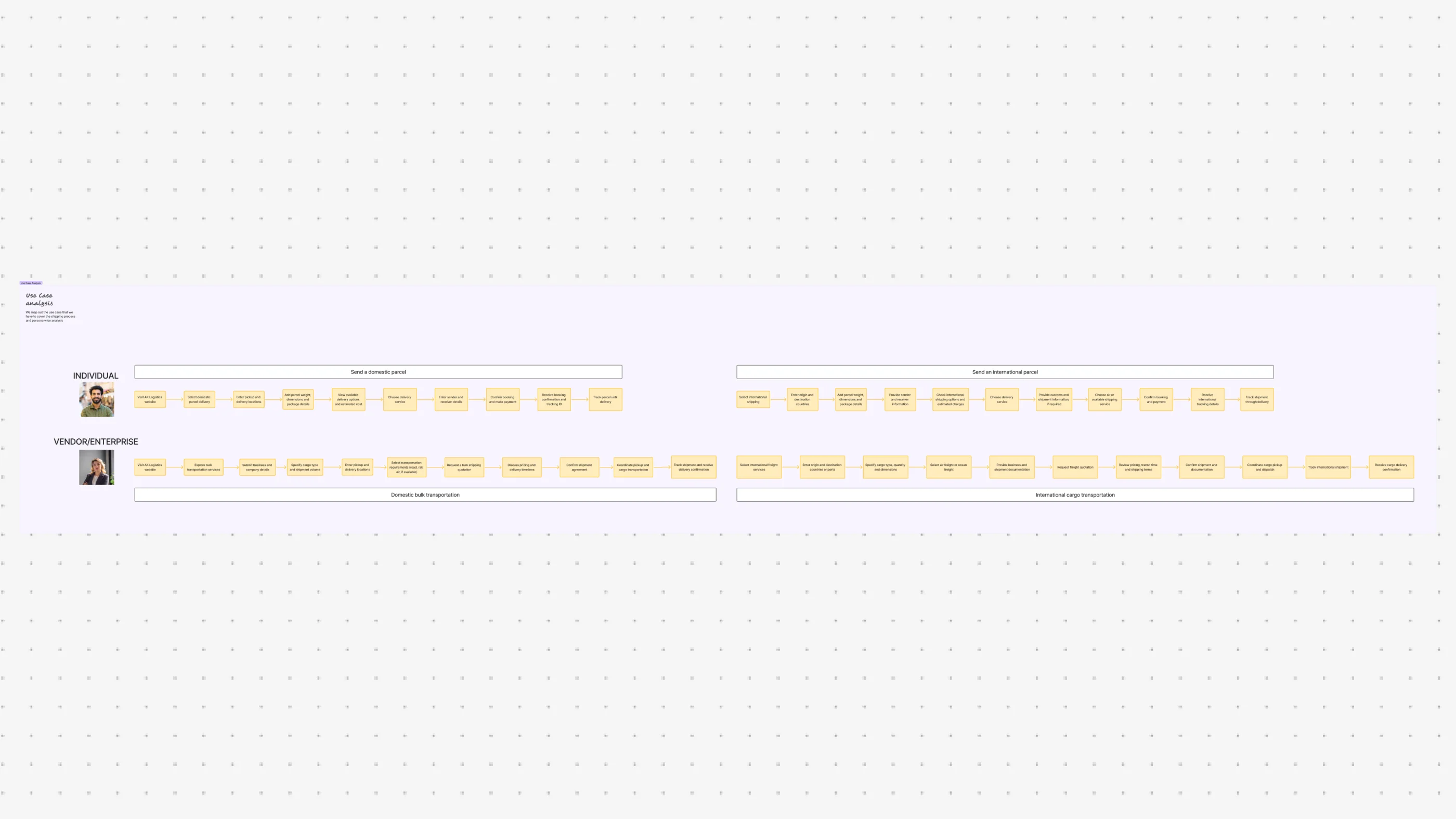
Based on the identified audience needs, I outlined the primary interactions the website needed to support.
Rather than treating the website as a collection of static pages, I approached it as a platform where visitors could discover services, understand solutions, and take action.
The main use cases included:
- Exploring logistics services and delivery options
- Finding solutions based on business requirements
- Understanding the shipment process
- Accessing shipment tracking
- Requesting a quote or submitting an enquiry
- Finding company information and global presence
- Contacting customer support
These use cases helped define the essential functionality and guided the structure of the website.
Deliverables: Core use cases, feature requirements, and interaction priorities.
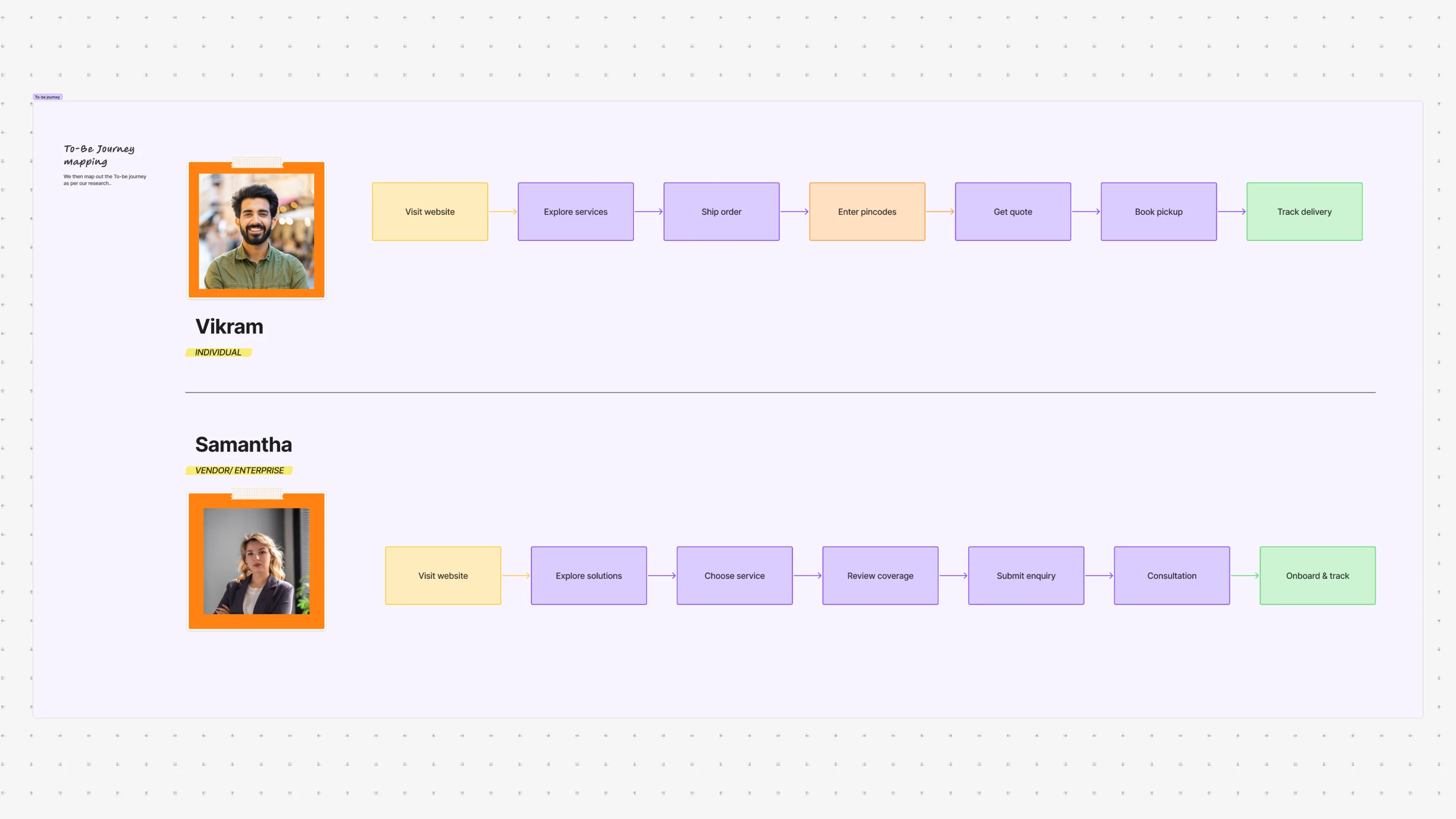
To-Be Journey Mapping
Creating a simpler path from discovery to action
The redesigned experience was structured around making each step more intuitive.
Visitors can begin by understanding what AK Logistics offers, explore services based on their requirements, and move towards the next action without having to search through unrelated information.
I organized the experience around a few clear stages:
Discover — Understand the company, its capabilities, and its logistics offerings.
Explore — Browse services and business solutions based on specific shipping needs.
Evaluate — Understand how the shipping process works and what each service offers.
Take Action — Track shipments, request a quote, or connect with customer support.
The objective was to make the experience feel connected from the first interaction to the final enquiry.
Deliverables: Proposed customer journey and experience flow.
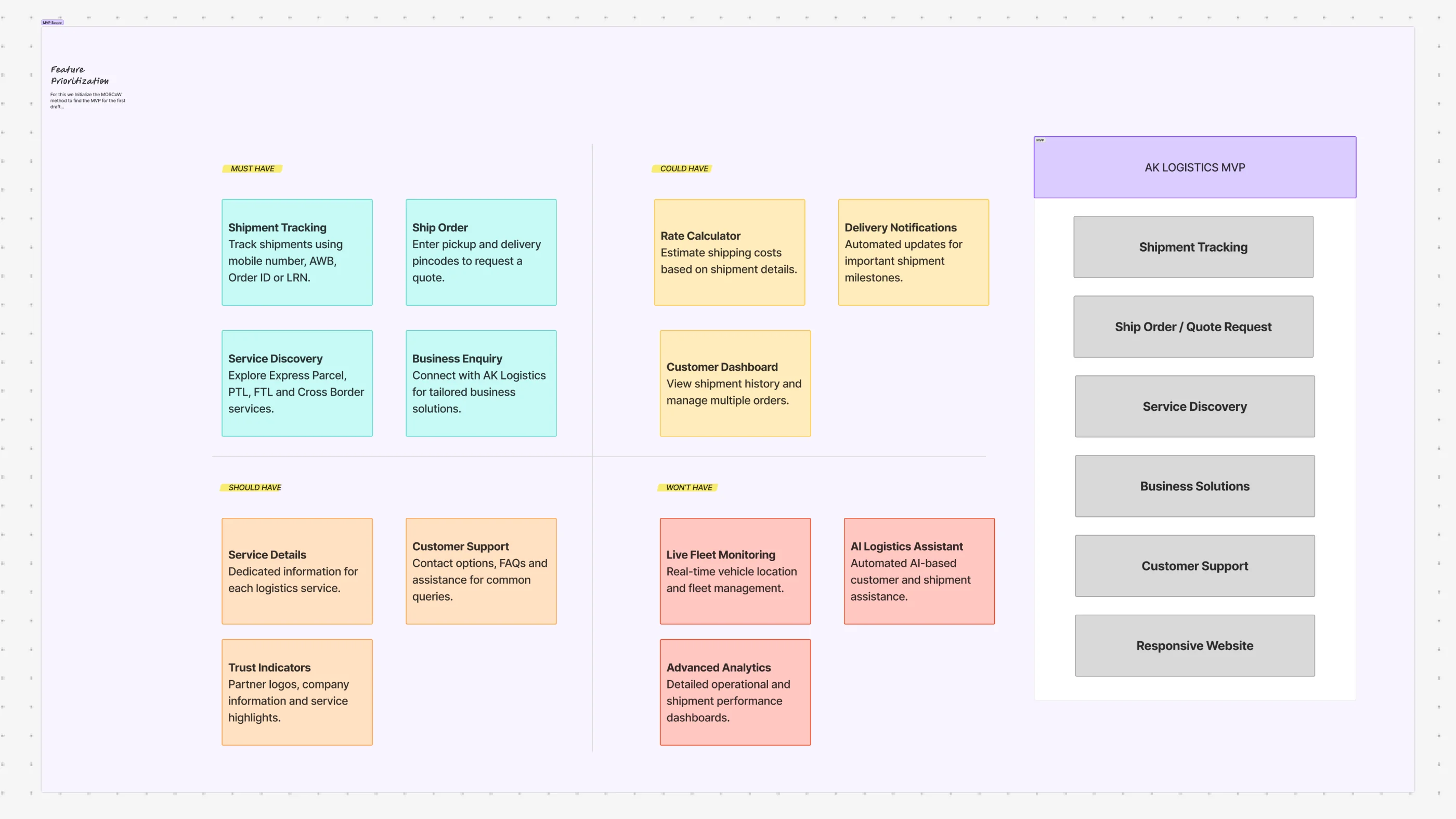
Feature Prioritization and MVP Scope
Focusing on the essential experience
With multiple services and business requirements to consider, I prioritized the website features based on their importance to the overall customer journey.
The focus was on establishing the core experience first, ensuring that visitors could understand the business, discover its services, and find the right way to proceed.
Core Features
- Homepage and company introduction
- Logistics service discovery
- Business solutions
- Shipment tracking entry point
- Customer support and contact form
- FAQ section
- Global presence and company information
Supporting Features
- Customer testimonials
- News and industry insights
- Newsletter subscription
- Careers and additional company information
This approach helped maintain focus on the most important customer interactions while leaving room for future expansion.
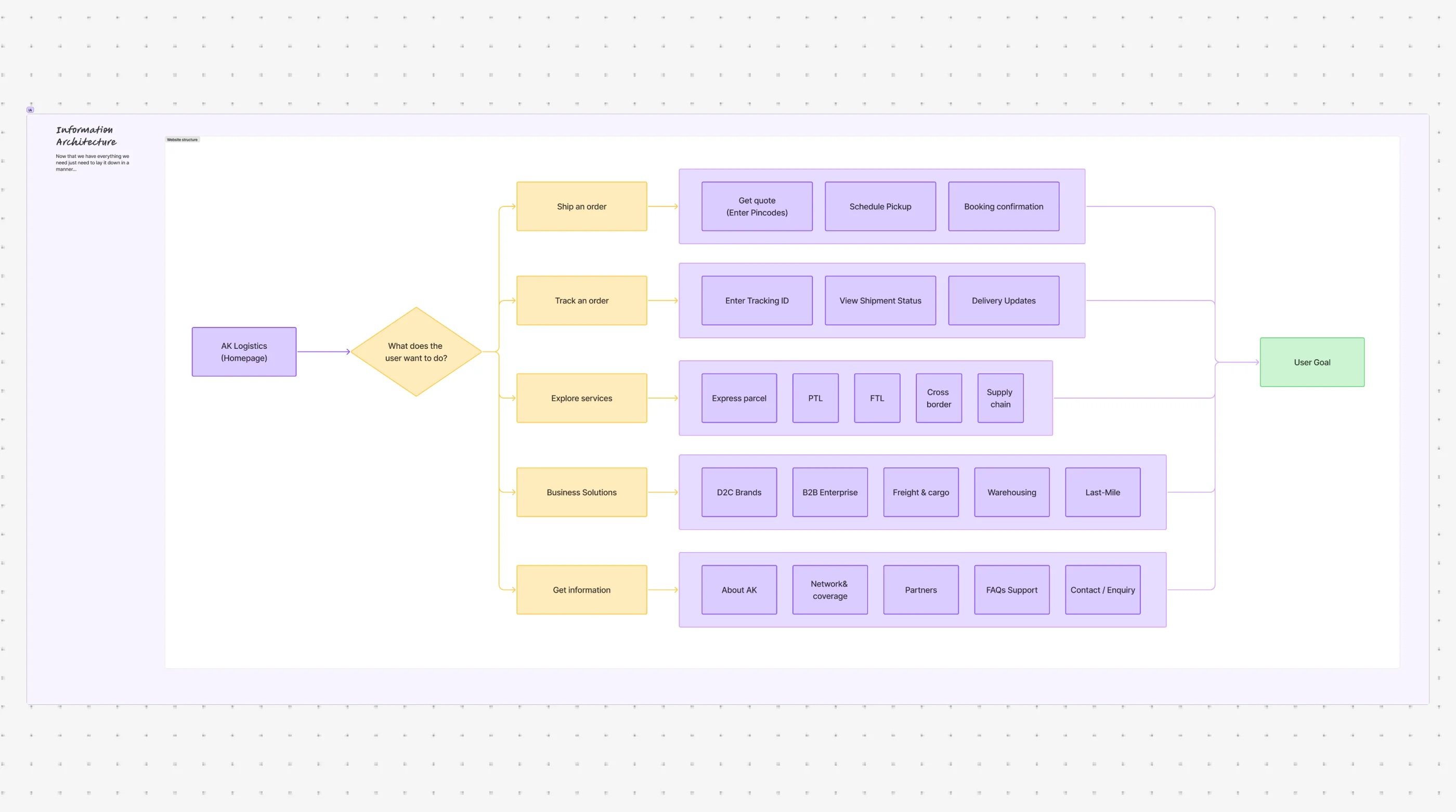
Information Architecture
Bringing the entire experience together
Once the key use cases and features were established, I organized the website into a clear information architecture.
The goal was to make navigation predictable and ensure that visitors could move between the company’s services, solutions, and support resources without confusion.
The primary structure included:
Home
Company introduction, key capabilities, service highlights, trust signals, and primary calls to action.
About Us
Company story, vision, operational journey, and team information.
Services
Express Parcel, Warehousing, PTL, FTL, Cross-Border Shipping, and other logistics offerings.
Solutions
D2C Brands, Personal Courier, B2B Enterprises, Freight & Cargo, and other business-specific solutions.
Customer Support
Contact form, support channels, office information, and frequently asked questions.
Tracking
A dedicated entry point for shipment tracking.
Deliverables: Website sitemap, navigation structure, and page hierarchy.
Design and AI-assisted Development
From Figma concepts to a functional website
One of the most interesting parts of this project was taking an earlier design concept and developing it into a working website.
I had already explored the initial visual direction in Figma, but the project had remained incomplete. I decided to revisit it and use an AI-assisted development workflow to move beyond static screens.
I approached the process in stages:
1. Design Direction
Established the visual foundation, layout direction, typography, colours, and brand identity. I also designed the AK Logistics logo to give the project a distinct visual identity.
2. AI-assisted Development
Used AI as a development partner to translate design ideas into functional website components, structure pages, and accelerate implementation.
3. Iteration and Refinement
Reviewed the generated interfaces, refined layouts, adjusted spacing and visual hierarchy, and made changes wherever the output did not match the intended experience.
4. Deployment
Used Vercel to deploy the website and make the project accessible as a live experience.
The important part was not simply generating a website with AI. It was learning how to guide the workflow, evaluate the output, and make design-led decisions throughout development.
Reflection and Learnings
Designing beyond the interface
AK Logistics gave me the opportunity to explore a more complete design-to-development workflow, moving from an initial Figma concept to a functional website.
AI as a Creative Partner
I learned how AI-assisted development can help accelerate implementation, explore different approaches, and reduce the gap between design concepts and working interfaces.
Design Still Needs Direction
AI can generate components and interfaces, but understanding hierarchy, usability, consistency, and user expectations still requires thoughtful design decisions.
Thinking Beyond Individual Pages
Working across multiple website sections helped me understand the importance of creating a connected experience rather than designing each page in isolation.
From Concept to Execution
Perhaps the biggest takeaway was seeing an idea that had been sitting unfinished in Figma evolve into a complete, accessible website.
For me, AK Logistics was more than a website design exercise. It was an opportunity to combine product thinking, visual design, and AI-assisted development to take ownership of the entire process.